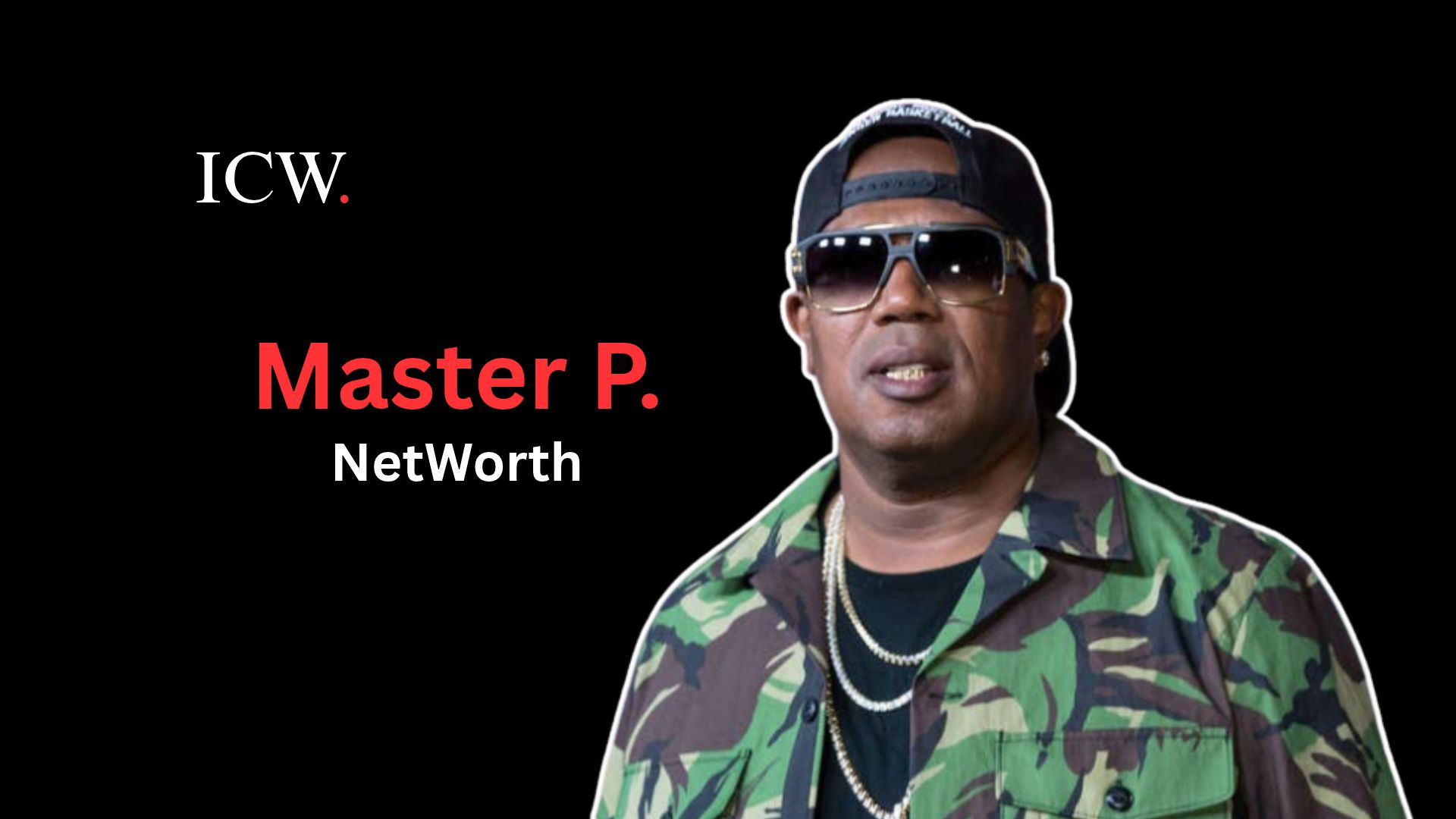
Percy Robert Miller Sr., known to the world as Master P, is an American rapper, record producer, entrepreneur, and former athlete. He changed the entire music business in the 1990s by creating No Limit Records and proving artists could own their masters.
Master P has an estimated net worth of $200 million in 2026. His fortune comes from his legendary music catalog, independent film distribution, private equity, and national food brands. Most artists rely only on royalties, but Miller built a diversified consumer product empire that generates cash every year.
Quick Facts at a Glance
| Fact | Detail |
|---|---|
| Full Legal Name | Percy Robert Miller Sr. |
| Estimated Net Worth | $200 Million |
| Primary Sources of Wealth | Music Royalties, Consumer Food Brands, Film Production, Real Estate |
| Estimated Annual Income | $10 Million to $15 Million |
| Record Label Founded | No Limit Records (founded in 1991) |
| Date of Birth | April 29, 1967 |
| Birthplace | New Orleans, Louisiana (Calliope Projects) |
| College Education | University of Houston, Merritt College |
| Signature Hit Singles | “Make ‘Em Say Uhh!”, “Bourbons and Lacs”, “I Got the Hook-Up!” |
What Is Master P’s Net Worth in 2026?
Master P’s net worth sits at an estimated $200 million in 2026. While high-end estimates push toward $225 million, conservative audits place his liquid holdings and private equity closer to $190 million. His total wealth reflects decades of smart contract negotiation, asset ownership, and brand creation.
To understand his financial health, one must review the difference between asset value and cash flow. Our guide on net worth vs income vs revenue explains how private equity, product inventory, and corporate sales differ from personal take-home pay. Miller does not just rely on a paycheck. He owns physical operating companies with wide distribution networks.
- Music Publishing and Master Catalog: Ongoing streaming checks and licensing fees from over 75 million albums sold worldwide.
- Packaged Goods and Foods: Major ownership stakes in Rap Snacks, Broadus Foods, and independent breakfast lines.
- Commercial Real Estate: Rental properties, industrial warehouse spaces, and luxury residential real estate across California, Texas, and Louisiana.
- Film and Television Library: Residuals from classic independent movies that he funded, produced, and distributed directly.
Net Worth and Income Stream Breakdown
| Asset Category | Estimated Value Range | How It Is Calculated |
|---|---|---|
| No Limit Music Catalog & Royalties | $65 Million to $75 Million | Streaming revenue multiples, sync licensing, and physical catalog sales. |
| Food and Consumer Brands | $60 Million to $75 Million | Equity valuation across Rap Snacks, Broadus Foods, and snack lines. |
| Real Estate Portfolio | $35 Million to $45 Million | Commercial storage, residential homes, and multi-family units. |
| Film, TV, and Media Residuals | $15 Million to $20 Million | Direct video sales, digital distribution, and streaming syndication. |
| Liquid Cash and Private Investments | $15 Million to $20 Million | Cash reserves, index investments, and private company holdings. |
Early Life in New Orleans and the Birth of No Limit
Percy Miller grew up in the Calliope Housing Projects in the Third Ward of New Orleans. Life in the neighborhood was tough, marked by poverty and high crime rates. Miller used athletics and business discipline to chart a path forward.
He excelled at basketball during high school and earned an athletic scholarship to the University of Houston. An injury cut his college playing days short, prompting a transfer to Merritt College in Oakland, California, where he studied business administration. That classroom experience gave him the baseline financial knowledge he needed to navigate corporate entertainment.
The $10,000 Malpractice Settlement
The turning point in Miller’s career arrived after the tragic passing of his grandfather. The family received a $10,000 medical malpractice settlement. Instead of spending the funds on everyday bills or luxury items, Miller invested the money directly into his future.
In 1990, he opened a small record shop in Richmond, California called No Limit Records. The store functioned as an ear to the street. He studied customer buying habits, saw what tapes were moving, and figured out how independent distributors operated. He realized that selling his own music would yield higher profit margins than retailing other artists’ tapes.
The Historic Priority Records Distribution Deal
Miller recorded his early projects independently and sold cassette tapes out of the trunk of his car. As local demand surged across the West Coast and the South, major labels took notice. Most labels wanted to sign Miller as an artist, which would mean surrendering his master recordings.
Miller refused standard recording contracts. In 1996, he negotiated a landmark distribution agreement with Priority Records. Priority handled pressing and physical shipping, while Miller retained 100% ownership of his master recordings and kept 85% of every wholesale record sold. Standard artist deals at the time gave musicians only 12% to 15%. This single contract allowed Miller to generate massive wealth faster than almost any entertainer of his era.
Music Royalties, Film Projects, and Business Ventures
During the late 1990s, No Limit Records dominated the music charts. The label released albums at a relentless pace, often dropping a new project every few weeks with vibrant, airbrushed album covers. Artists like Snoop Dogg, Mystikal, C-Murder, and Silkk the Shocker sold millions of copies under the No Limit banner.
By 1998, Forbes ranked Master P tenth on its list of America’s highest-paid entertainers, estimating his annual income at $56.5 million. He proved that high-volume distribution combined with master ownership generated unprecedented profit margins.
Career Milestones and Wealth Drivers
| Milestone or Venture | Active Years | Key Achievement and Financial Impact |
|---|---|---|
| No Limit Records Launch | 1991 to 2003 | Sold over 75 million albums worldwide with an 85% revenue split. |
| “I’m Bout It” Film Release | 1997 | Generated over $10 million in direct-to-video sales on a $200,000 budget. |
| “Ghetto D” Album | 1997 | Certified triple platinum, selling over 3 million copies in the United States. |
| Professional Basketball Stints | 1998 to 1999 | Secured preseason contracts with the Charlotte Hornets and Toronto Raptors. |
| Rap Snacks Partnership | 2007 to Present | Expanded urban grocery distribution across thousands of convenience stores. |
| Broadus Foods Co-Founding | 2022 to Present | Launched Snoop Cereal and national breakfast lines targeting major grocery chains. |
Independent Film Production
Miller applied the same DIY playbook to Hollywood. In 1997, he wrote, produced, directed, and starred in the independent film I’m Bout It. Major movie studios rejected the film, so Miller financed it himself for roughly $200,000.
He bypassed traditional theaters and sold the movie directly on VHS cassette tapes. The movie became an instant hit, selling hundreds of thousands of copies and bringing in more than $10 million in revenue. He followed up with theatrical releases like I Got the Hook-Up and Foolish, demonstrating how independent media companies can maximize returns without studio interference.
The Food and Consumer Goods Empire
In recent years, Master P focused his energy on consumer packaged goods. He partnered with James Lindsay to grow Rap Snacks, a snack food company featuring hip-hop artists on chip bags and ramen noodle packaging. The brand secured distribution inside major grocery chains, gas stations, and discount retailers nationwide.
Alongside longtime friend Snoop Dogg, Miller founded Broadus Foods to produce breakfast staples like Snoop Cereal and Momma Snoop oatmeal. Building consumer packaged goods is complex, as detailed in this Courthouse News legal report regarding their corporate distribution dispute with Post Holdings and Walmart. Despite retail distribution challenges, food brands remain one of Miller’s most valuable modern equity drivers. For deeper context on how modern product empires are evaluated, read our creator business valuation guide.
Real Estate and Professional Sports
Beyond packaged goods, Miller holds an extensive real estate portfolio. He owns luxury homes in Beverly Hills and New Orleans, along with multi-unit rental buildings and commercial warehouses. His business model emphasizes buying physical assets that appreciate over time.
Miller also made sports history. In 1998 and 1999, he earned preseason training camp contracts in the NBA with the Charlotte Hornets and the Toronto Raptors. While he did not make the final regular season rosters, he played professionally in both the Continental Basketball Association and the International Basketball League. That athletic discipline shaped how he manages his modern enterprises, a journey outlined in this Entrepreneur profile on Master P.
Why Master P’s Valuation Varies and Peer Comparison
Master P’s net worth estimates fluctuate between public rankings. Because his companies operate as privately held limited liability corporations, financial reporters cannot inspect public quarterly filings. Net worth audits must calculate business value using brand revenue multiples, catalog streams, and physical property records.
Taxes, distributor fees, and legal costs also impact net personal wealth. For comparisons across other self-made business moguls, check out our Barbara Corcoran net worth analysis or browse our broader musician category archive to see how music executives convert creative output into generational wealth.
Peer Wealth Comparison Table
| Public Figure | Primary Industry | Estimated Net Worth | Primary Wealth Driver |
|---|---|---|---|
| Master P | Hip-Hop & Packaged Goods | $200 Million | No Limit Master Catalog, Rap Snacks, Real Estate |
| Birdman (Bryan Williams) | Hip-Hop & Entertainment | $150 Million | Cash Money Records, Publishing Royalties |
| Ice Cube | Music, Film & Sports | $160 Million | Big3 Basketball League, Cube Vision Film Catalog |
| Snoop Dogg | Hip-Hop & Media | $160 Million | Death Row Brand, Touring, Endorsements, Media |
| Jay-Z (Shawn Carter) | Entertainment & Venture Capital | $2.5 Billion | Armand de Brignac, D’Usse, Marcy Venture Partners |
Frequently Asked Questions About Master P’s Net Worth
How much is Master P worth in 2026?
Master P has an estimated net worth of $200 million in 2026, driven by his music catalog, consumer food brands, and commercial real estate investments.
How did Master P get his initial business start?
He used a $10,000 malpractice settlement after his grandfather passed away to open his No Limit Records retail shop in Richmond, California in 1990.
What made Master P’s record deal unique?
He negotiated an 85% wholesale profit split with Priority Records while retaining 100% ownership of his master recordings, an unheard-of contract for an independent artist.
Does Master P own Rap Snacks?
Master P is a major partner and brand ambassador for Rap Snacks, helping expand its grocery distribution and launching line extensions like Rap Noodles.
Did Master P ever play in the NBA?
He participated in official preseason training camp games with the Charlotte Hornets in 1998 and the Toronto Raptors in 1999, though he never appeared in a regular-season game.
How many albums did No Limit Records sell?
No Limit Records sold more than 75 million albums worldwide during its peak years, establishing Percy Miller as one of the most profitable music executives in history.
Conclusion
Master P wrote the modern blueprint for artist independence. By keeping his master recordings and negotiating an unheard-of 85% distribution cut, he turned street singles into a nine-figure fortune. His transition from neighborhood rapper to national food executive proves that ownership matters more than fame.
Today, Percy Miller continues to expand his consumer brands, mentor younger entrepreneurs, and invest in sustainable community projects. His $200 million net worth stands as clear proof of what happens when financial literacy meets relentless work ethic.