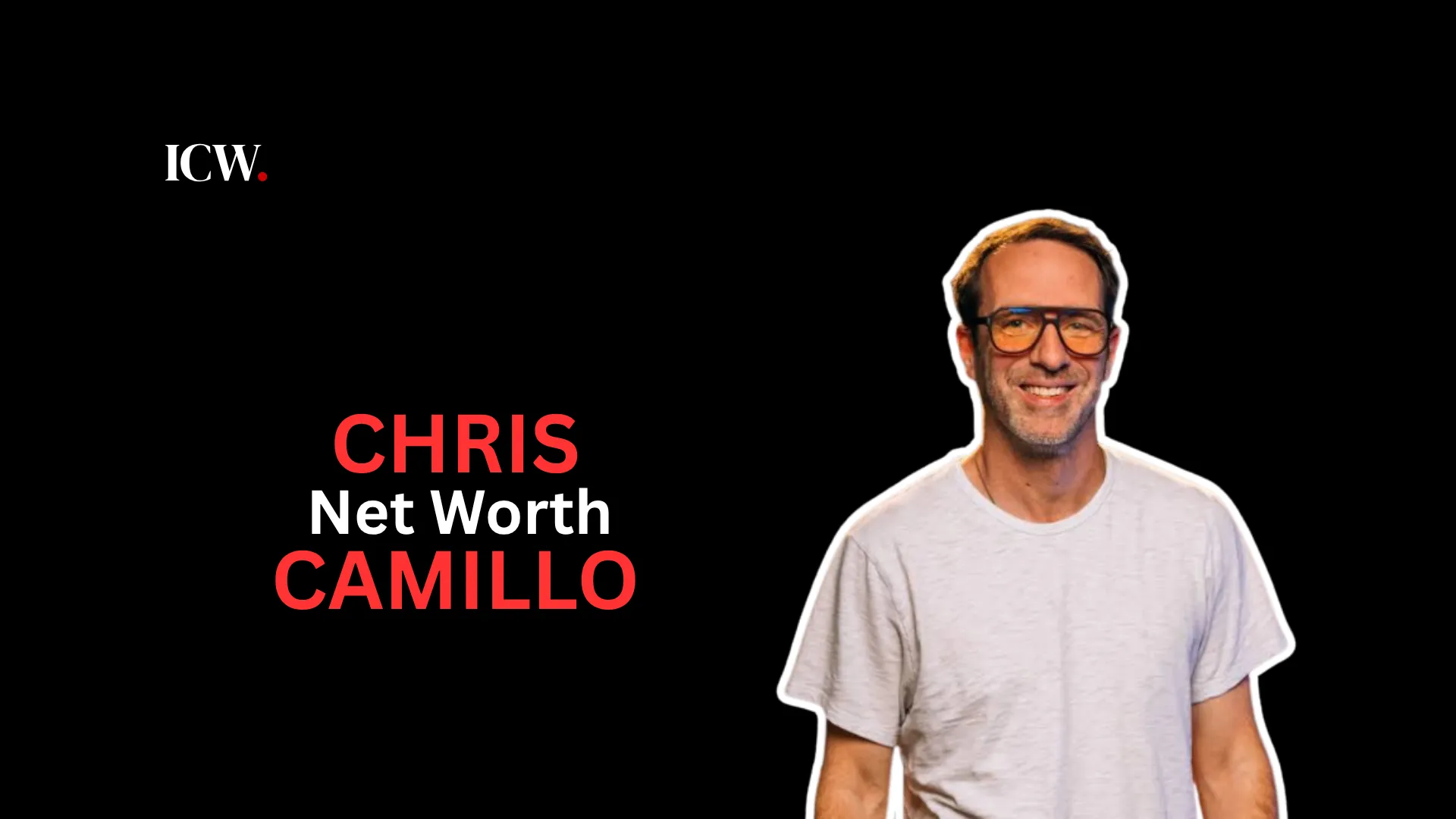
Chris Camillo is an American retail investor, author, and media personality based in Texas. He is best known as the co-founder of the YouTube show Dumb Money Live and the creator of an investing style called social arbitrage.
Chris Camillo has an estimated net worth of $65 million in 2026. His personal fortune sits in a range between $55 million and $75 million. He built this wealth through retail stock trading, high-conviction options trades, media sponsorships, and the sale of his data company, TickerTags.
Quick Facts at a Glance
| Detail | Information |
|---|---|
| Full Name | Chris Camillo |
| Estimated Net Worth | $65 Million (Range: $55M to $75M) |
| Primary Wealth Source | Social Arbitrage Stock and Options Trading |
| Secondary Income | YouTube AdSense, Sponsorships, Book Royalties, Tech Exit |
| Popular Media | Dumb Money Live (YouTube, Discord community) |
| Published Books | Laughing at Wall Street (2011) |
| Past Companies | TickerTags (Sold to M Science in 2018) |
| Featured In | Unknown Market Wizards by Jack Schwager (2020) |
| Location | Dallas, Texas |
What Is Chris Camillo’s Net Worth in 2026?
Chris Camillo holds an estimated net worth of $65 million. Unlike traditional Wall Street fund managers who manage client funds, Camillo trades his own money. When understanding net worth vs income vs revenue, his wealth changes based on market swings and his open equity positions[cite: 1].
His wealth breaks down across several clear categories:
- Public Stock and Options Portfolio: The majority of his wealth stays invested in high-conviction equity positions and long-term call options.
- Software Company Exit: In 2018, Camillo sold his social data company, TickerTags, to research firm M Science for an undisclosed multimillion-dollar sum.
- Media and Community Assets: Revenue from Dumb Money Live, digital courses, brand sponsorships, and paid community tools.
- Cash and Real Estate Holdings: Prime residential and commercial real estate assets located in Dallas, Texas.
Net Worth and Asset Valuation Breakdown
| Asset Category | Estimated Value | How It Is Calculated |
|---|---|---|
| Liquid Trading Portfolio | $45,000,000 to $58,000,000 | Audited stock accounts, option contracts, and compounding returns |
| Tech Exit Proceeds (TickerTags) | $6,000,000 to $10,000,000 | Net cash and equity received after the 2018 acquisition by M Science |
| Dumb Money Brand & Digital Media | $2,000,000 to $4,000,000 | Media valuation based on channel sponsorships, views, and membership revenue |
| Texas Real Estate & Cash Reserves | $3,000,000 to $5,000,000 | Residential properties in Dallas along with safe liquidity reserves |
Early Life and the Discovery of Social Arbitrage
Chris Camillo grew up with an interest in business from an early age. He was not born into wealth, and he never worked at an investment bank on Wall Street. Instead, he spent his youth testing small business ideas and observing how everyday consumers spend their hard-earned cash.
Starting with Humble Capital
In the late 2000s, Camillo committed to a personal trading experiment. He took a starting stake of roughly $20,000 to $84,000. He decided to avoid standard Wall Street tools like price-to-earnings ratios or technical chart patterns. He noticed that financial analysts in New York often learn about consumer trends months after regular shoppers do.
Developing the Social Arbitrage Method
Camillo defined his method as social arbitrage. The strategy is straightforward:
- Spot a shift in human behavior or consumer demand before it hits the news.
- Connect that real-world change to a specific publicly traded company.
- Buy stock or call options before Wall Street catches on.
- Sell the position as soon as the rest of the market notices and the stock price jumps.
In 2011, Camillo published his investing guide, Laughing at Wall Street. The book explained how regular people can turn observations at shopping malls, grocery stores, and playgrounds into winning trades.
Trading Fortunes, TickerTags Exit, and Dumb Money Live
Camillo proved his system was not just beginner luck. Over a 15-year period, his account grew exponentially. Respected trading author Jack Schwager independently reviewed Camillo’s tax returns and brokerage accounts for his book Unknown Market Wizards. The audit confirmed that Camillo generated an audited annualized return of over 70% to 80% across several years without relying on traditional finance models.
Major Trading Milestones and Career Timeline
| Period | Milestone or Event | Financial Impact |
|---|---|---|
| 2007 to 2010 | Grew his initial small account into over $2 million during the Great Financial Crisis | Proved the viability of consumer trend investing |
| 2011 | Published his bestselling book, Laughing at Wall Street | Gained national media attention from CNBC and Fox Business |
| 2015 to 2018 | Founded the alternative data platform TickerTags | Sold the platform to financial data giant M Science in 2018 |
| 2020 | Launched Dumb Money Live on YouTube with Dave Hanson and Jordan Mclain | Built a massive community tracking live trades in real time |
| 2020 | Featured in Jack Schwager’s book Unknown Market Wizards | Audited track record verified trading profits past $42 million |
| 2021 to 2026 | Expanded portfolio to over $60M through tech and AI infrastructure positions | Consolidated position among top independent retail investors |
Building and Selling TickerTags
To scale his research, Camillo created software that tracked word spikes across social media channels. He founded TickerTags in Dallas. The platform monitored millions of online conversations to find sudden shifts in brand sentiment.
TickerTags gained national fame in 2016 when its social sentiment data correctly predicted the Brexit vote result before official pollsters did. In 2018, data intelligence firm M Science acquired TickerTags. The transaction provided Camillo with substantial fresh capital to expand his personal trading portfolio. Readers can explore the TickerTags data platform profile for more details on its technology[cite: 1].
The Rise of Dumb Money Live
In 2020, Camillo teamed up with his longtime friends Dave Hanson and Jordan Mclain to launch Dumb Money Live. The trio set up live streams where they openly shared their brokerage balances, research screens, and market ideas. They called the channel “Dumb Money” as a playful jab at Wall Street pros who look down on retail investors.
The channel quickly drew hundreds of thousands of subscribers. Rather than charging high newsletter fees, they made their YouTube content accessible to everyone. As detailed in this Benzinga market report on Chris Camillo, his transparent trading style inspired an entire generation of individual market participants.
Valuation Context and Financial Peer Comparison
Estimating the net worth of an active stock trader is different from evaluating an executive with a fixed corporate salary. Because Camillo manages a concentrated portfolio, his net worth moves alongside market cycles. During strong bull markets, his call options can expand his wealth by tens of millions of dollars in a few quarters. During downturns, holding cash preserves his base.
Camillo stands out because he achieved high-eight-figure wealth without managing an outside hedge fund. Below is how his estimated fortune compares to other self-made financial personalities, authors, and online business leaders.
Financial Peer Comparison
| Name | Primary Niche | Estimated Net Worth | Primary Wealth Driver |
|---|---|---|---|
| Chris Camillo | Social Arbitrage & Retail Trading | $65 Million | Personal Trading, TickerTags Sale, Media |
| Codie Sanchez | Small Business & Private Equity | $35 Million | Contrarian Thinking, Cash-Flowing Assets |
| Morgan Housel | Financial Writing & Venture Capital | $15 Million | Bestselling Books, The Collaborative Fund |
| David Sacks | Venture Capital & SaaS Software | $400 Million | Craft Ventures, PayPal, Yammer Sale |
While venture capitalists like venture capitalist David Sacks net worth come from early software investments, Camillo created his fortune in public equities[cite: 1]. His journey shows striking similarities to investor Codie Sanchez net worth, who emphasizes finding simple, overlooked opportunities in everyday life[cite: 1]. At the same time, his behavioral insights mirror the mindset lessons discussed in profiles like financial writer Morgan Housel net worth[cite: 1].
Conclusion
Chris Camillo turned a modest personal savings balance into a $65 million fortune by trusting his eyes instead of Wall Street consensus. By spotting everyday cultural trends on platforms like TikTok and YouTube, he proved that everyday consumers can beat seasoned hedge fund managers at their own game.
Between his active portfolio, his YouTube platform on Dumb Money Live, and his verified track record, Camillo remains one of the most unique figures in modern finance. His social arbitrage model continues to inspire retail investors who want to turn daily life observations into life-changing investments.
Frequently Asked Questions About Chris Camillo
How did Chris Camillo get so rich?
Camillo built his wealth using social arbitrage. He noticed shifts in consumer buying behavior on social media and bought related stocks before Wall Street analysts caught up.
What is Chris Camillo’s net worth in 2026?
Chris Camillo has an estimated net worth of $65 million in 2026. His personal trading account and business assets put his range between $55 million and $75 million.
Does Chris Camillo use stock charts or stop losses?
No. Camillo trades on consumer information rather than price charts. He does not use technical indicators or stop losses, preferring high conviction in real-world data.
What company did Chris Camillo sell?
Camillo founded the social sentiment research company TickerTags. He sold the firm to alternative data company M Science in 2018 for a multimillion-dollar payout.
What is Dumb Money Live?
Dumb Money Live is a popular YouTube channel and investing show. Camillo co-hosts the show alongside his friends Dave Hanson and Jordan Mclain to share market trades openly.