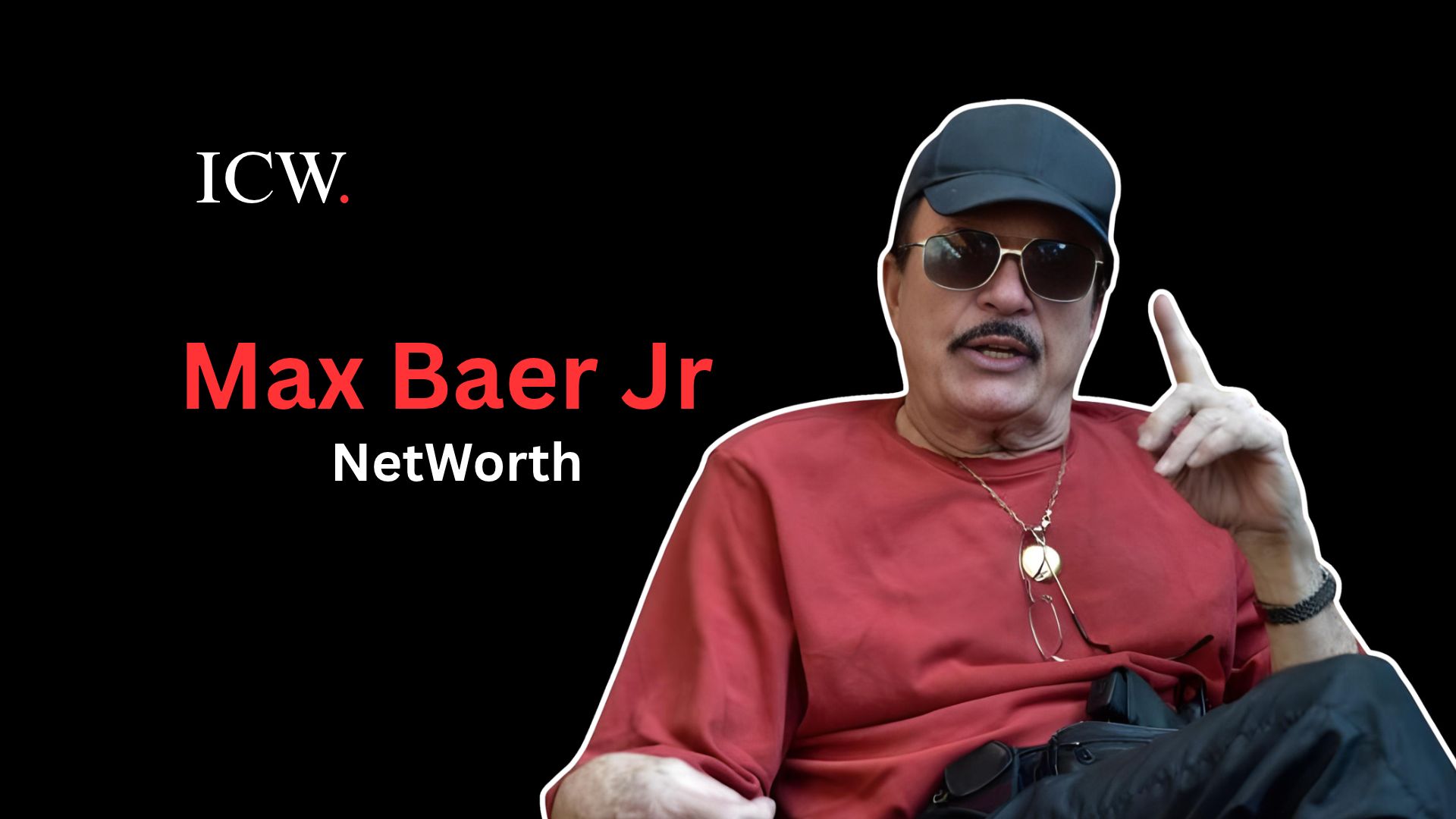
Max Baer Jr is best known to millions of television viewers as Jethro Bodine on the classic CBS comedy series The Beverly Hillbillies. He played the lovable, muscle-bound nephew of Jed Clampett for nine straight seasons. In addition to acting, Baer spent decades working as an independent film director, movie producer, and commercial entrepreneur.
Max Baer Jr has an estimated net worth of $50 million in 2026. While many fans assume he made his money from sitcom royalties, his true wealth came after the show ended. He earned his fortune by writing and producing historic drive-in movie hits, licensing casino slot machines, and investing in Nevada real estate.
Quick Facts at a Glance
| Fact | Details |
|---|---|
| Full Legal Name | Maximilian Adelbert Baer Jr. |
| Estimated Net Worth | $50 Million |
| Estimated Net Worth Range | $45 Million to $55 Million |
| Primary Wealth Sources | Independent Film Production, Casino Slot Licensing, Real Estate |
| Most Famous Role | Jethro Bodine (and Jethrine Bodine) in The Beverly Hillbillies |
| Biggest Film Hit | Macon County Line (1974) |
| Date of Birth | November 4, 1937 |
| Birthplace | Oakland, California |
| College Education | Santa Clara University (Bachelor of Science in Business Administration) |
| Living Status | Alive (Last surviving original regular cast member of The Beverly Hillbillies) |
What Is Max Baer Jr.’s Net Worth in 2026?
Max Baer Jr.’s net worth is estimated at $50 million in 2026. Most entertainment observers find this number surprising because 1960s television stars did not receive modern syndication contracts. Early television contracts paid actors a flat weekly rate with small rerun fees that ended after five or six airings. Baer did not build his millions from CBS rerun checks.
Instead, Baer used his business degree and his personal savings to take bold financial risks. He understood the difference between net worth vs income vs revenue early in his career. He focused on owning master rights, film negatives, and branding licenses rather than waiting for an acting paycheck. That ownership strategy generated massive, long-term wealth.
| Asset or Income Stream | Estimated Value Range | How It Is Calculated |
|---|---|---|
| Independent Film Profits and Rights | $20 Million to $24 Million | Lifetime global box office, television syndication, and home video sales from Macon County Line and Ode to Billy Joe. |
| Casino Gaming & Slot Machine Licensing | $15 Million to $18 Million | Decades of recurring royalties from IGT Beverly Hillbillies video slot machines placed in North American casinos. |
| Nevada Real Estate Holdings | $8 Million to $12 Million | Appraised values of personal real estate in Zephyr Cove, Lake Tahoe, along with commercial parcels in Douglas County. |
| Sitcom Residuals & Personal Appearances | $2 Million to $3 Million | Historical union residuals, merchandise agreements, paid convention appearances, and television specials. |
Baer’s financial foundation rests on three main pillars:
- Self-Financed Cinema: He produced independent films that cost very little to make but earned tens of millions of dollars at the box office.
- Sub-Licensing Rights: He bought the gambling and restaurant sub-licensing rights to The Beverly Hillbillies from CBS in 1991, turning a nostalgic title into an ongoing cash cow.
- Property Assets: He acquired land and residential holdings across Northern Nevada during periods of rapid growth.
Early Life, Boxing Roots, and Rise to Television Stardom
Max Baer Jr was born into American sports royalty. However, he chose a completely different path than his famous father, relying on education, acting, and business savvy to build his own reputation.
Growing Up in the Shadow of a World Boxing Champion
Maximilian Adelbert Baer Jr was born on November 4, 1937, in Oakland, California. His father was Max Baer Sr., the charismatic World Heavyweight Boxing Champion who won the title in 1934. His uncle, Buddy Baer, was another famous heavyweight contender who later worked as a Hollywood character actor. Despite his family’s boxing fame, young Max was discouraged from fighting in the ring by his parents.
Baer attended Santa Clara University, where he earned a bachelor’s degree in business administration with a minor in philosophy. His business training proved critical later in life when he negotiated complex distribution deals and licensing pacts. After graduation, he began taking acting classes and booked guest spots on television shows like Maverick, Surfside 6, and Hawaiian Eye.
Landing Jethro Bodine on The Beverly Hillbillies
In 1962, Baer auditioned for television producer Paul Henning. Henning was developing a new comedy about a poor Ozark mountaineer family that strikes oil and moves to a mansion in California. Baer won the part of Jethro Bodine, the well-meaning, uneducated nephew who bragged about his sixth-grade education. Baer also wore a dress and wig to play Jethro’s twin sister, Jethrine Bodine, in early episodes.
The Beverly Hillbillies became an instant cultural phenomenon. It ranked as the number-one television show in the United States during its first two seasons and stayed on the air for nine seasons, spanning 274 episodes until 1971. Baer became a household face alongside Buddy Ebsen, Irene Ryan, and Donna Douglas. His work on the show earned him a permanent spot among famous TV personality net worth profiles.
Independent Movie Profits, Casino Deals, and Real Estate
When The Beverly Hillbillies ended in 1971, Baer faced a major professional crisis. Hollywood directors and casting agents could only see him as Jethro Bodine. Rather than quitting the entertainment industry, Baer decided to move behind the camera and build his own production empire.
| Project or Business Venture | Active Years | Role or Position | Financial & Commercial Performance |
|---|---|---|---|
| The Beverly Hillbillies | 1962 to 1971 | Series Regular (Jethro & Jethrine) | Hit CBS comedy spanning 274 episodes; earned standard weekly union actor salaries. |
| Macon County Line | 1974 | Writer, Producer, Lead Actor | Produced for $110,000; earned more than $25 million in initial box office receipts. |
| The Wild McCullochs | 1975 | Writer, Director, Producer | Independent regional release; generated solid box office returns across southern drive-in theaters. |
| Ode to Billy Joe | 1976 | Director, Producer | Produced for $1.1 million; earned over $27 million globally at the theatrical box office. |
| IGT Slot Machine Licensing | 1991 to Present | Intellectual Property Licensor | Generated millions in recurring gaming royalties from casino floors across North America. |
| Nevada Land and Casino Projects | 1995 to 2014 | Property Developer & Investor | Acquired prime parcels in Douglas County and Carson City for planned commercial developments. |
Beating Typecasting with Macon County Line
After the sitcom wrapped, Baer could not find serious dramatic acting jobs. In a later interview, he stated plainly that survival was his main motivation. He wrote a gritty Southern crime story called Macon County Line and scraped together $110,000 to produce it independently. He also starred in the film as Deputy Reed Morgan alongside Alan Vint and Cheryl Waters.
The film was released in 1974 and shocked the film industry. Macon County Line grossed more than $25 million at the box office, with some distribution tallies reaching $30 million. It became one of the most profitable movies in cinema history relative to its production budget. As detailed in a MeTV retrospective on Baer’s career, this self-financed project gave Baer total financial independence from the major Hollywood studios.
Baer followed up his first hit with Ode to Billy Joe in 1976. He bought the rights to Bobbie Gentry’s hit mystery ballad, directed the film, and produced it for $1.1 million. The movie went on to gross over $27 million worldwide. For complete production and directing credits, readers can explore Max Baer Jr.’s IMDb filmography credits.
The Beverly Hillbillies Slot Machine Licensing Deal
In 1991, Baer noticed that classic television shows were driving huge consumer interest. He approached CBS and negotiated an agreement granting him exclusive sub-licensing rights to The Beverly Hillbillies name for gambling, casino gaming, and food products. At the time, major studios viewed casino gaming as a minor novelty.
Baer partnered with International Game Technology (IGT), the premier slot machine manufacturer in the world. Together, they launched a series of Beverly Hillbillies video slot machines. The games featured show sound bites, banjo music, and animated character reels. They became an instant hit on casino floors in Las Vegas, Reno, and Atlantic City. Baer received ongoing royalty checks for decades, securing millions of dollars in steady passive cash flow.
Nevada Real Estate Holdings and the Casino Dream
Baer moved to Nevada and bought a scenic mountain home overlooking Lake Tahoe in Zephyr Cove. Using his movie and licensing capital, he spent more than two decades trying to build a full-scale resort called Jethro Bodine’s Beverly Hillbillies Mansion & Casino. His plans called for gaming tables, a hotel, Granny’s diner, and a massive decorative oil derrick.
Although local zoning battles in Reno, Carson City, and Douglas County prevented the full resort from opening, Baer handled his land deals with great care. He owned prime commercial land along major highway corridors and settled development disputes through legal agreements. These real estate assets appreciated significantly over the years, protecting his multi-million dollar net worth.
Valuation Context and Classic TV Peer Comparisons
Estimating the net worth of legacy Hollywood figures requires examining private assets. Because Baer is not an active public corporate executive, his financial standing cannot be pulled from stock filings. Analysts estimate his worth using standard creator business valuation methods, combining box office receipts, licensing royalty benchmarks, and verified county property records.
Gross career earnings are also subject to taxes, legal fees, and development costs. Baer spent millions defending his trademark rights and funding architectural surveys for his casino proposals. Even after accounting for those overhead expenses, his equity in property and ongoing royalties keeps him far ahead of most television stars from his generation.
| Entertainer | Primary Niche or Role | Estimated Net Worth | Main Wealth Driver |
|---|---|---|---|
| Max Baer Jr | Actor, Producer & Entrepreneur | $50 Million | Independent film profits, IGT slot licensing royalties, and Nevada land. |
| Buddy Ebsen (Estate) | Actor (The Beverly Hillbillies, Barnaby Jones) | $10 Million | Decades of television salaries, coin collections, and book royalties. |
| Donna Douglas (Estate) | Actress (Elly May Clampett) | $5 Million | Film appearances, gospel music albums, speaking tours, and real estate. |
| Bill Hader | Actor, Director & Comedian | $14 Million | Salaries from Saturday Night Live, writing, and directing, as shown in Bill Hader’s net worth. |
| Alan Alda | Actor, Director & Screenwriter | $40 Million | Starring roles, directing, and long-term syndication deals on M*A*S*H. |
People Also Ask About Max Baer Jr.
Is Max Baer Jr still alive in 2026?
Yes, Max Baer Jr is alive. Born on November 4, 1937, he is the last surviving regular cast member of The Beverly Hillbillies.
How much did Max Baer Jr make on The Beverly Hillbillies?
Baer earned standard television actor salaries during the 1960s, starting around $800 weekly. He did not receive modern syndication royalties from network reruns.
How did Max Baer Jr become so wealthy?
He built his fortune by producing independent movies like Macon County Line, licensing Beverly Hillbillies slot machines with IGT, and investing in Nevada real estate.
Did Max Baer Jr ever open his Beverly Hillbillies casino?
No, his planned themed casino never opened. Local zoning battles, resident opposition, and regulatory hurdles in Nevada prevented the project from being built.
What was Max Baer Jr.’s most successful movie?
Macon County Line was his most profitable film. It cost $110,000 to make in 1974 and grossed more than $25 million at the box office.
Who was Max Baer Jr.’s famous father?
His father was Max Baer Sr., the World Heavyweight Boxing Champion who held the title in 1934 and defeated Primo Carnera.
Conclusion
Max Baer Jr turned what could have been a career-ending typecast into one of the most profitable second acts in entertainment history. When Hollywood refused to hire Jethro Bodine for dramatic roles, he bet on himself as an independent filmmaker and broke box office records with Macon County Line.
His later moves into casino slot machine licensing and Nevada real estate proved that his business degree was put to great use. Today, Max Baer Jr stands as a wealthy Hollywood survivor with a $50 million fortune built on risk-taking, smart licensing, and total creative independence.