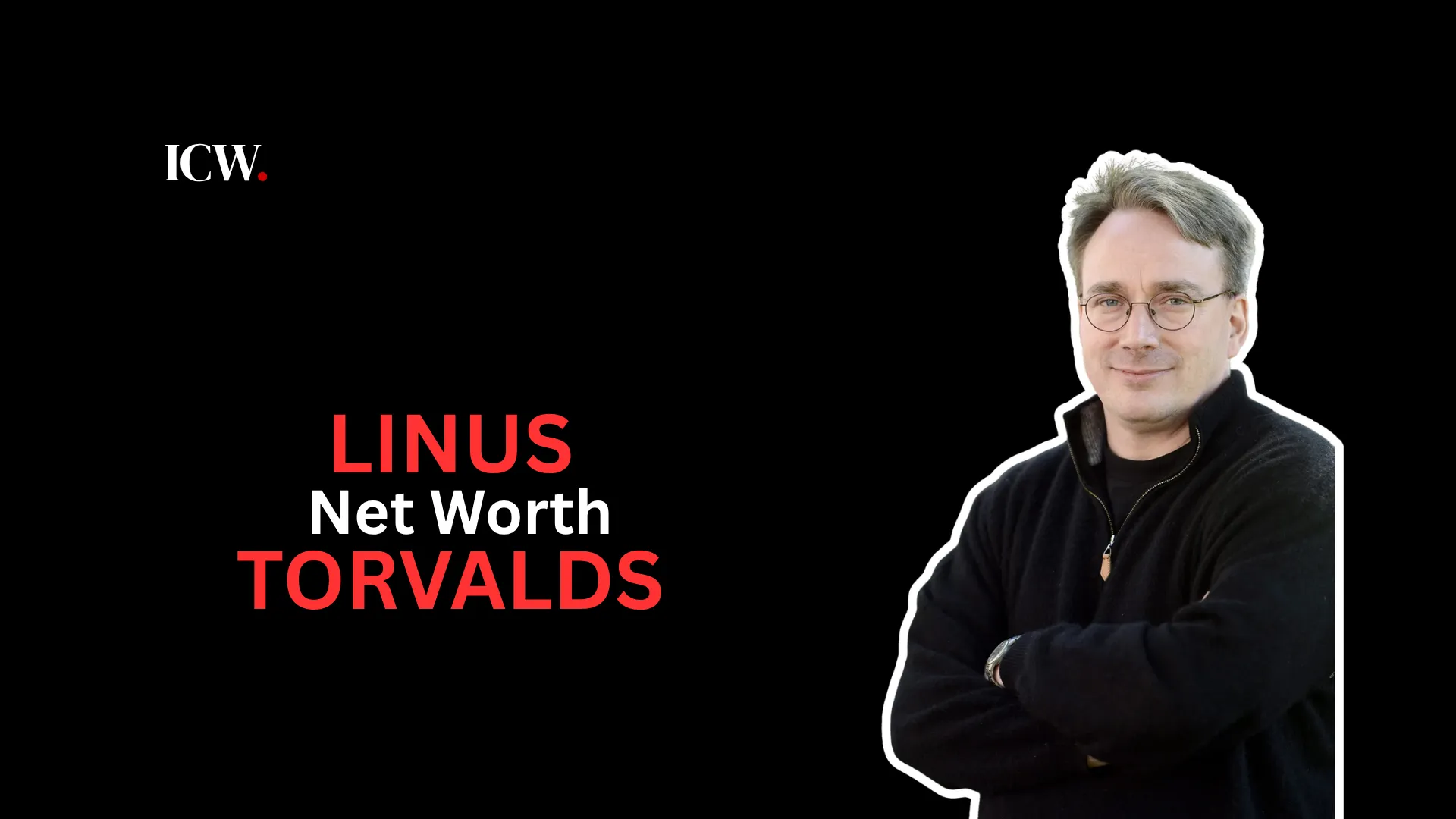
Linus Torvalds is the Finnish-American software engineer who created Linux, the open-source operating system kernel that runs the modern internet. He also created Git, the version control system used by millions of software developers across the globe.
Linus Torvalds has an estimated net worth of $50 million in 2026. His fortune comes from his steady salary as a fellow at The Linux Foundation, early tech stock options from companies like Red Hat, and smart long-term investments.
Quick Facts at a Glance
| Data Point | Details |
|---|---|
| Full Name | Linus Benedict Torvalds |
| Estimated Net Worth (2026) | $50 Million (Range: $45M to $55M) |
| Primary Income Source | Linux Foundation Fellow Salary |
| Estimated Yearly Salary | $1.5 Million to $2.0 Million |
| Most Famous Creations | Linux Operating System Kernel (1991), Git (2005) |
| Date of Birth | December 28, 1969 |
| Birthplace | Helsinki, Finland |
| Education | Master of Science in Computer Science, University of Helsinki |
| Spouse | Tove Torvalds |
| Current Residence | Dunthorpe (Portland area), Oregon, USA |
What Is Linus Torvalds’ Net Worth in 2026?
Linus Torvalds holds an estimated net worth of $50 million as of 2026. While his software powers billions of smartphones, supercomputers, and cloud servers, he never turned Linux into a closed, paid product. Instead, he gave the code away for free to the public under an open-source license.
His wealth comes from several steady and historic financial streams:
- Annual Foundation Compensation: He earns between $1.5 million and $2.0 million each year to lead Linux kernel releases.
- Historic Stock Options: In the late 1990s, tech companies like Red Hat and Transmeta awarded him valuable pre-IPO shares.
- Real Estate Holdings: He owns a luxury family home in the Portland, Oregon metro area.
- Cash Reserves and Liquid Assets: Decades of high-level earnings invested in stable market funds.
To understand how an engineer builds wealth from a free software project, it helps to review the difference between net worth vs income vs revenue. While companies generate billions in revenue using Linux, Torvalds earns a personal salary and holds accumulated investment equity.
Net Worth and Wealth Breakdown
| Asset Category | Estimated Value Range | Share of Wealth | Key Details |
|---|---|---|---|
| Linux Foundation Compensation | $20 Million to $25 Million | 45% | Cumulative earnings from over 20 years of full-time fellowship pay. |
| Equity and Historic Stock Holdings | $15 Million to $20 Million | 35% | Gains realized from Red Hat, VA Linux, and Transmeta shares. |
| Real Estate and Personal Property | $4 Million to $6 Million | 10% | Private residential estate located in Dunthorpe, Oregon. |
| Retirement and Cash Investments | $5 Million to $6 Million | 10% | Diversified index funds, bonds, and personal savings. |
Early Life, Helsinki Roots, and the Birth of Linux
Linus Torvalds was born in Helsinki, Finland, on December 28, 1969. His parents were journalists, and he grew up in a family that valued reading and science. He was named after Linus Pauling, the Nobel Prize-winning chemist.
Childhood in Finland and First Computers
Torvalds discovered his love for computers through his grandfather, Leo Törnqvist, who was a statistics professor. His grandfather bought a Commodore VIC-20 computer in the early 1980s. Young Linus sat on his lap and typed out basic math programs.
Soon, Torvalds began writing his own code in machine language. He later bought a Sinclair QL computer, saving up his money to master programming. He cared little for computer games. Instead, he wanted to know how the machine worked from the inside out.
Building the First Linux Kernel at University
In 1988, Torvalds enrolled at the University of Helsinki to study computer science. In 1991, he bought an IBM-compatible PC with an Intel 386 processor. He wanted a Unix-like system to run on his computer at home, but commercial systems were far too expensive.
He decided to write his own operating system kernel from scratch. On August 25, 1991, he posted a famous message to an online newsgroup. He called it a hobby project and said it would not be big or professional. That simple hobby project grew into Linux.
Silicon Valley Career, Git Creation, and Linux Foundation Salary
Linus Torvalds moved to California in 1997 to work for Transmeta, a secret computer chip startup. He spent several years working on software for their low-power processors while continuing to guide Linux in his spare time.
Career Milestones and Financial Timeline
| Year or Era | Career Milestone | Financial Impact | Industry Significance |
|---|---|---|---|
| 1991 | Released first Linux kernel version | $0 direct income | Began the worldwide open-source operating system movement. |
| 1997 to 2003 | Software Engineer at Transmeta | Base tech salary plus stock options | Helped him gain permanent residency in the United States. |
| 1999 | Red Hat and VA Linux IPOs | Stock options rose toward $20 Million | Provided his first major personal financial security buffer. |
| 2003 to 2007 | Joined Open Source Development Labs (OSDL) | Full-time salary funded by tech consortium | Allowed him to focus 100% on Linux development. |
| 2005 | Created Git version control software | $0 direct income (released free) | Replaced older systems and became the world standard tool. |
| 2007 to Present | Fellow at The Linux Foundation | $1.5M to $2.0M annual compensation | Manages all official stable releases of the Linux kernel. |
The Transmeta Years and Dot-Com Stock Options
While working at Transmeta, Torvalds received special recognition from open-source companies. In 1999, commercial Linux distributors Red Hat and VA Linux gave him blocks of stock options as a sign of gratitude for creating the kernel.
When both companies launched their initial public offerings (IPOs) during the dot-com boom, Torvalds’ stock options briefly reached an estimated value of roughly $20 million. Although the dot-com crash lowered tech valuations shortly after, selling portions of that stock gave him financial independence for life.
Creating Git in 2005
In 2005, a major crisis hit the Linux development community. The developers had been using a proprietary tool called BitKeeper to track their code. When that relationship ended, Torvalds took a short break from the Linux kernel to solve the problem.
In less than a month, he coded the first version of Git. He built it to handle thousands of code changes quickly and safely. Like Linux, he released Git as free software. Today, platforms like GitHub and GitLab exist because of Git, yet Torvalds never charged a single penny for it.
Full-Time Fellowship at The Linux Foundation
Since 2007, Torvalds has worked as an independent fellow at The Linux Foundation. The foundation is a non-profit group supported by major tech giants, including Google, Microsoft, Meta, Oracle, and IBM.
The foundation pays Torvalds an annual salary of approximately $1.5 million to $2.0 million. This salary ensures that he remains neutral. He does not favor any single company when deciding which new code enters the official Linux kernel.
He works from his quiet home office in Dunthorpe, Oregon. He reviews code sent by developers from all over the world, releases new kernel updates every few months, and avoids corporate boardrooms.
Why Linus Torvalds Chose Impact Over Billions
Many tech founders who built foundational tools became multi-billionaires. Bill Gates built Microsoft, while Steve Jobs built Apple. Had Linus Torvalds commercialized Linux as a private, closed software product in 1991, industry analysts believe he could easily have become one of the wealthiest people on Earth.
Torvalds chose a different path. He released Linux under the GNU General Public License (GPL). This license requires that all improvements made to the software remain free and open for everyone to study and improve.
His philosophy prioritized software quality and personal freedom over corporate wealth. He has often explained that he enjoys writing code and working in his home office far more than managing a massive corporation.
Over the years, his work has earned him major honors, including the Millennium Technology Prize and induction into the IEEE Computer Society profile honor roll.
Tech Industry Peer Comparison
| Tech Leader | Primary Company or Focus | Estimated Net Worth | Main Wealth Driver |
|---|---|---|---|
| Linus Torvalds | Linux Kernel and Git | $50 Million | Linux Foundation Salary and Tech Equity |
| Demis Hassabis | Google DeepMind (AI Research) | $100+ Million | Google Acquisition and DeepMind Leadership (see Demis Hassabis net worth) |
| David Sacks | PayPal and Craft Ventures | $200+ Million | Early Tech Exits and Venture Capital (see David Sacks net worth profile) |
| Tony Xu | DoorDash (Food Delivery) | $1.5+ Billion | Founder Equity and Public Tech Stock (see Tony Xu net worth analysis) |
| Guido van Rossum | Python Programming Language | $10M to $15M | Corporate Engineering Roles at Google, Dropbox, and Microsoft |
Frequently Asked Questions About Linus Torvalds’ Net Worth
How much money does Linus Torvalds make a year?
Linus Torvalds earns an estimated yearly salary between $1.5 million and $2.0 million as a fellow at The Linux Foundation.
Why is Linus Torvalds not a billionaire?
He released Linux for free under an open-source license instead of charging licensing fees like commercial software vendors.
Did Linus Torvalds make money from Git?
No, he created Git in 2005 as a free tool for the open-source community and never monetized the software.
Does Linus Torvalds own Linux?
He owns the registered trademark for the name Linux, but the code itself is owned by thousands of individual contributors.
What tech stocks did Linus Torvalds receive?
He received pre-IPO stock options from Red Hat and VA Linux, along with equity grants during his early employment at Transmeta.
Where does Linus Torvalds live today?
He lives with his family in Dunthorpe, a residential community just south of Portland, Oregon.
Final Thoughts on Linus Torvalds’ Fortune and Legacy
Linus Torvalds built a $50 million fortune on his own terms. Without ever selling out his code to a closed proprietary model, he achieved complete financial security while giving the world its most essential operating software. His work powers Android smartphones, modern web servers, and high-performance computing centers worldwide.
His story proves that dedication to open standards and public collaboration can lead to both global impact and a comfortable lifestyle. Explore more creator profiles and technology deep dives in our Tech Science section to see how other industry pioneers turned code into lasting value.